Multiplayer Challenge Arena
Review
Multiplayer Challenge Arena stands out for its clean, non-violent approach to competitive gaming. The round variety keeps matches unpredictable, and the elimination format creates genuine tension without any graphic content. Controls are intuitive enough for young children, yet the challenges remain engaging for adults. The lack of a deep progression system may disappoint some, but the core loop is strong enough to sustain repeated play. Regular content updates ensure the game doesn't grow stale. It is an excellent choice for families seeking a positive, screen-based activity that encourages mental agility.
About
Round Structure & Variety
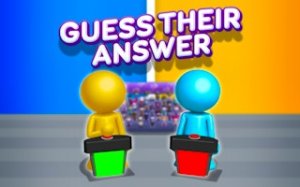
Multiplayer Challenge Arena organizes gameplay into distinct rounds, each presenting a unique objective. One round might ask players to recall a sequence of colors, while another demands rapid responses to on-screen prompts. This variety keeps each session feeling fresh, as no two rounds rely on the same skill set. The game rotates through these challenges unpredictably, ensuring that participants cannot rely on a single strategy to advance. Instead, they must adapt quickly to whatever task appears next.
Competitive Elimination Format
The core loop is straightforward: players compete simultaneously in each round, and those who fail to meet the objective are removed from the match. The process repeats until only one participant remains, who then earns points toward a running total. This elimination structure creates natural tension, as every round becomes a high-stakes moment. The game does not rely on violence or conflict; the challenge comes from mental agility and composure under pressure.
Accessibility & Control Scheme
Controls are intentionally minimal, often requiring only taps, clicks, or simple directional inputs. This design choice makes the game accessible to younger players and those less familiar with complex controller layouts. The interface uses clear visual cues and straightforward instructions, so players can jump into a match without lengthy tutorials. The game runs on standard web browsers and mobile devices with internet access, removing the need for specialized hardware.
Social Play & Matchmaking
Matches can include friends or strangers, as the game automatically pairs participants from its player base. There is no need to coordinate schedules; starting a match initiates a brief waiting period while the system assembles a group. This approach supports both spontaneous play sessions and planned gatherings. The social element is further enhanced by the ability to see opponents' progress in real time, adding a layer of friendly competition without direct interaction.
Progression & Reward System
Winning rounds and matches awards points that contribute to a player's overall standing. While the game does not feature a deep progression tree, consistent participation allows players to track their improvement over time. The system rewards persistence and adaptability rather than raw speed, encouraging players to refine their approach across multiple sessions. This light progression structure keeps the focus on the moment-to-moment gameplay rather than grinding for unlocks.
Content Updates & Longevity
The developers periodically introduce new round types to the rotation, preventing the experience from becoming stale. These updates are typically small in scope but meaningful in impact, adding fresh challenges that require different mental faculties. The game's design philosophy emphasizes quality over quantity, ensuring that each new task feels distinct from existing ones. This approach maintains the game's replay value over extended periods.





Comments
Sign in to leave a note
You must be logged in before posting a review or rating.
No account? Create one
No comments yet. Be the first to comment!